
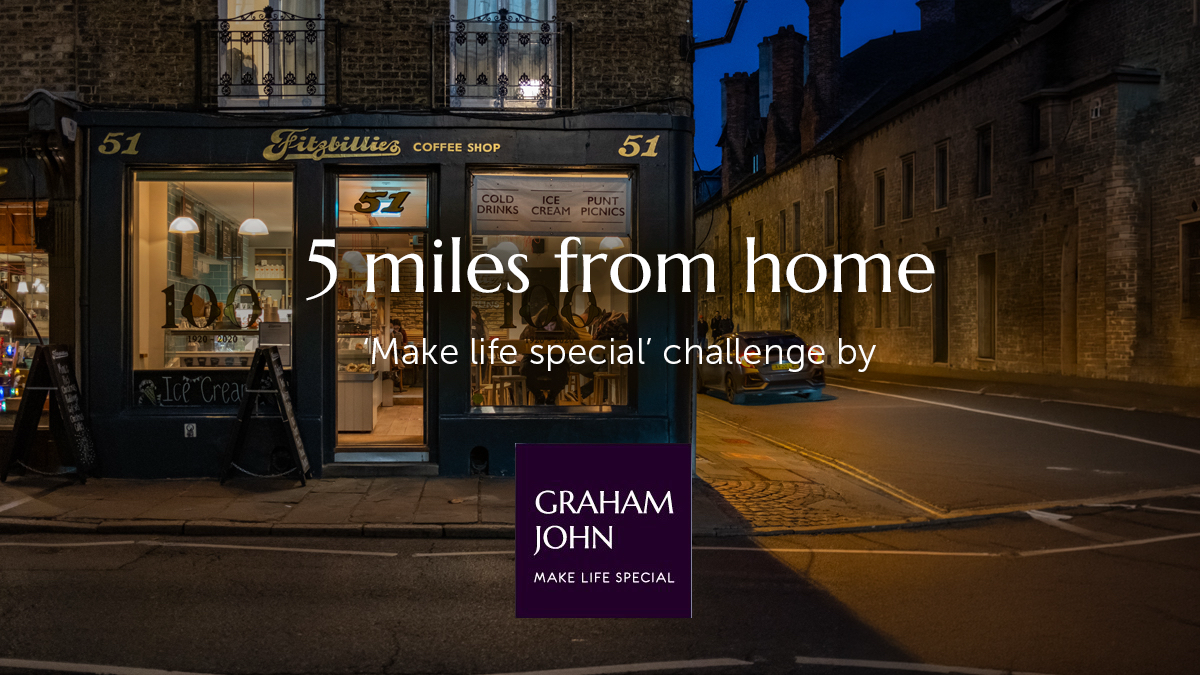
There’s an assumption we rarely stop to question.
That to feel different — refreshed, inspired, restored — we need to go somewhere else.
Further away. Further out. Somewhere new.
Distance, we tell ourselves, is the ingredient that makes experiences meaningful.
But recently, we noticed something quietly unexpected.
When distance is removed, attention increases.
When options narrow, experience deepens.
And when movement becomes intentional, even familiar places begin to feel new.
That observation is what shaped April’s Make Life Special challenge.
Not a grand adventure.
Not a packed itinerary.
Just a simple constraint — and a surprising result.
There’s also something particular about this moment in the year.
The clocks change and everything feels briefly out of step.
Mornings darken again just as evenings begin to stretch and soften.
For a few days, time feels unsettled — then we ease into the anticipation of summer.
Easter often reinforces that pause.
A walk instead of a rush.
A shared table.
A moment of noticing rather than doing.
April sits right there — between seasons, between speeds.
So this month’s challenge is intentionally small.
Go no further than five miles from your front door.
Within that radius are places most of us overlook precisely because they’re close.
Lanes we drive past without stopping.
Paths we’ve always meant to walk.
Cafés we say “one day” about.
Views we’ve never quite taken the time to stand still and see.
The invitation isn’t to cover ground — it’s to change how you move through it.
Choose a single micro‑journey.
Take it slowly.
Notice one thing properly.
It might be:
- a building whose story you’d never considered
- a footpath you didn’t know existed
- a detail that makes you pause
- or a moment that shifts how you feel about where you live
There’s no pressure to do it “well”.
No rules to follow.
Nothing to prove or post.
Just curiosity — and attention.
Because making life special doesn’t always require distance.
Sometimes it starts by realising that what we’re looking for
has been closer than we thought all along.




Leave a Reply